The Delicate Art of Preparing Blowfish by Licensed Fugu Chefs in Yamaguchi
Caution — this article and the footage contain a graphic description of fish processing, which could be unpleasant. Viewer discretion is advised.
Blowfish, a much-loved seasonal delicacy in Yamaguchi located in the west of the main island of Japam, is exactly as the name suggests.
In Hagi City (a well-preserved historic city), which had spawned a myriad of important figures who led the Meiji Restoration, I have a rare peek into how the “deadly”, and “poisonous” fish is processed by certified chefs without paralyzing themselves and their eaters.
I visit the city to attend a fugu preparation and cooking course in mid-January, the best fishing season for “mafugu” (Takifugu porphyreus).
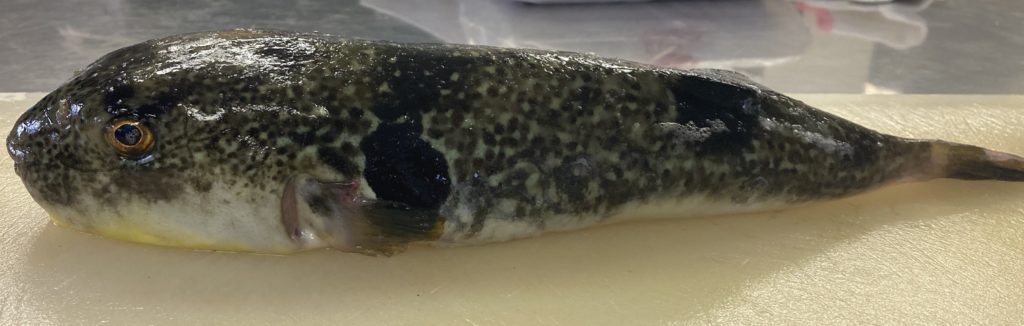
The fresh catch — brought alive from a fish market to a cutting board — can easily fool us by its cute and docile appearance until it reveals big, sharp teeth. The fish skin has black spots, which are slimy to the touch. The scaleless fish protect themselves with mucus generated by their skin. The fish starts to make noise when you touch it as if air is pumped into a swimming ring, and inflates into a ball shape – and that’s why it’s called blowfish. Similar to porcupinefish, blowfish puff up as a defense mechanism when they are threatened.

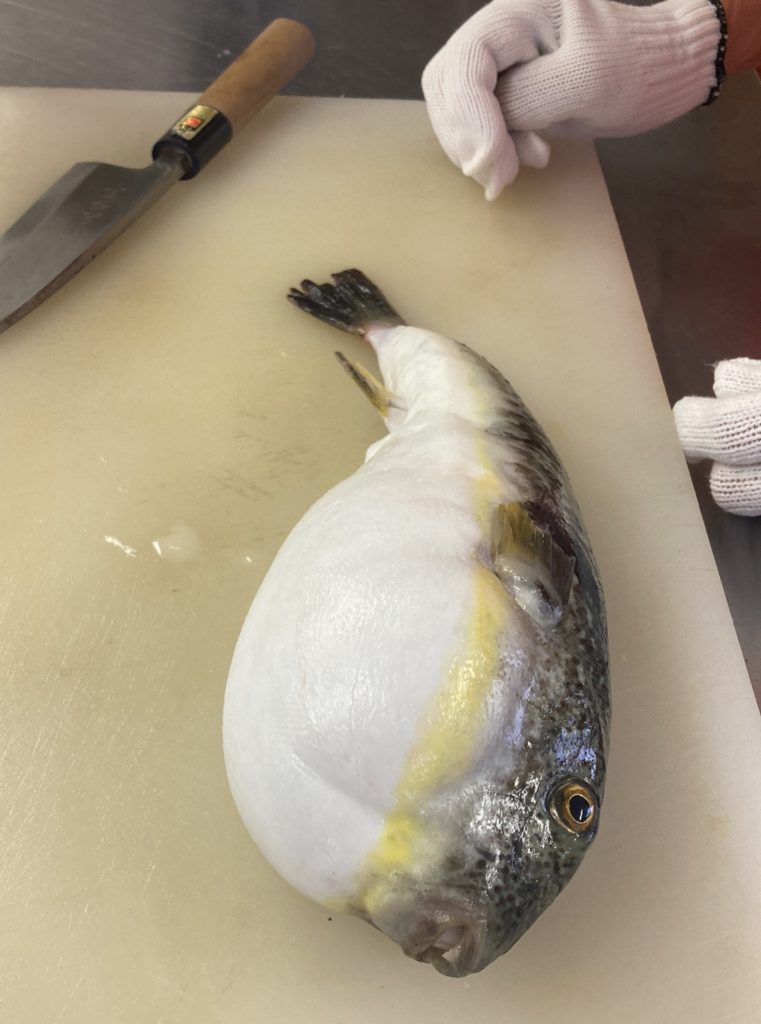
Akino Kamimura and Taeko, her sister, are local fugu license holders. They gladly announce to me that they are going to show me how to fillet the fish at their facility in a port town.
“Be careful not to put your finger into their mouth! Their teeth are strong enough to chomp off your finger,” Taeko warns me. With cotton gloves on, Akino holds a broad-bladed kitchen knife. First, she lays the fugu on one side, grabs the neck, and chops off its snout with the knife, leaving a gaping hole in front of the eyes. This step makes the following procedures easier. She then runs the blade at different angles to remove the fins and the skin. At this point, the skinless fish is still breathing! It is still alive!
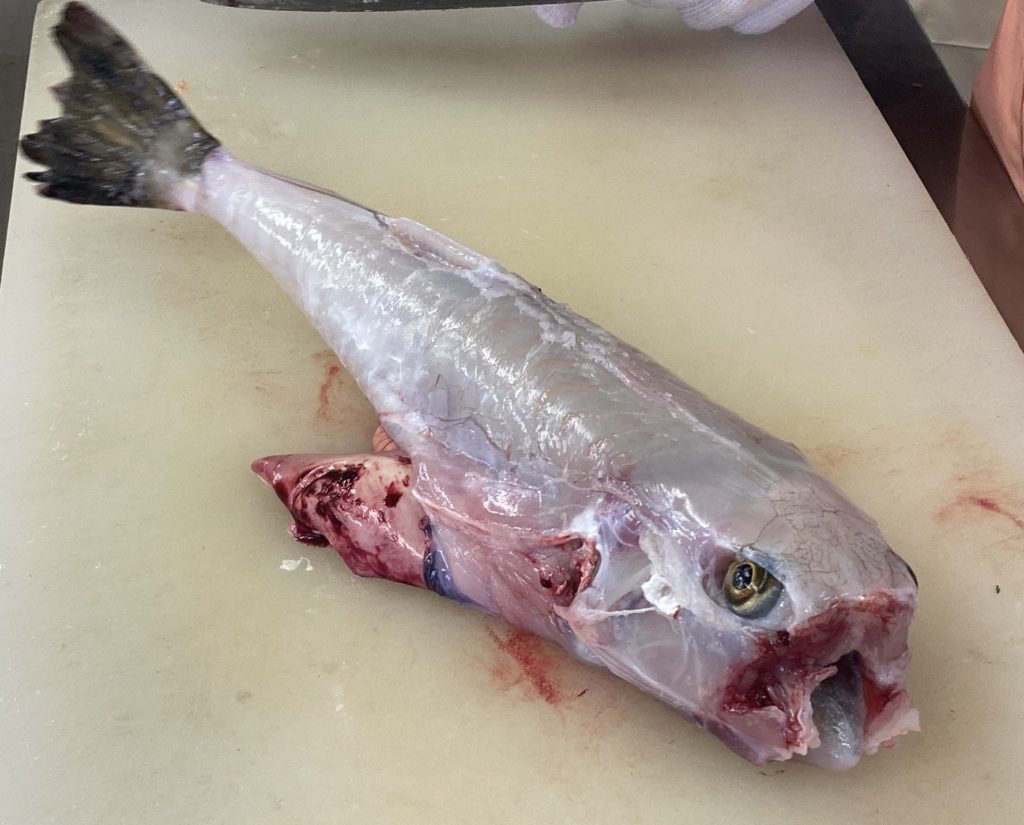
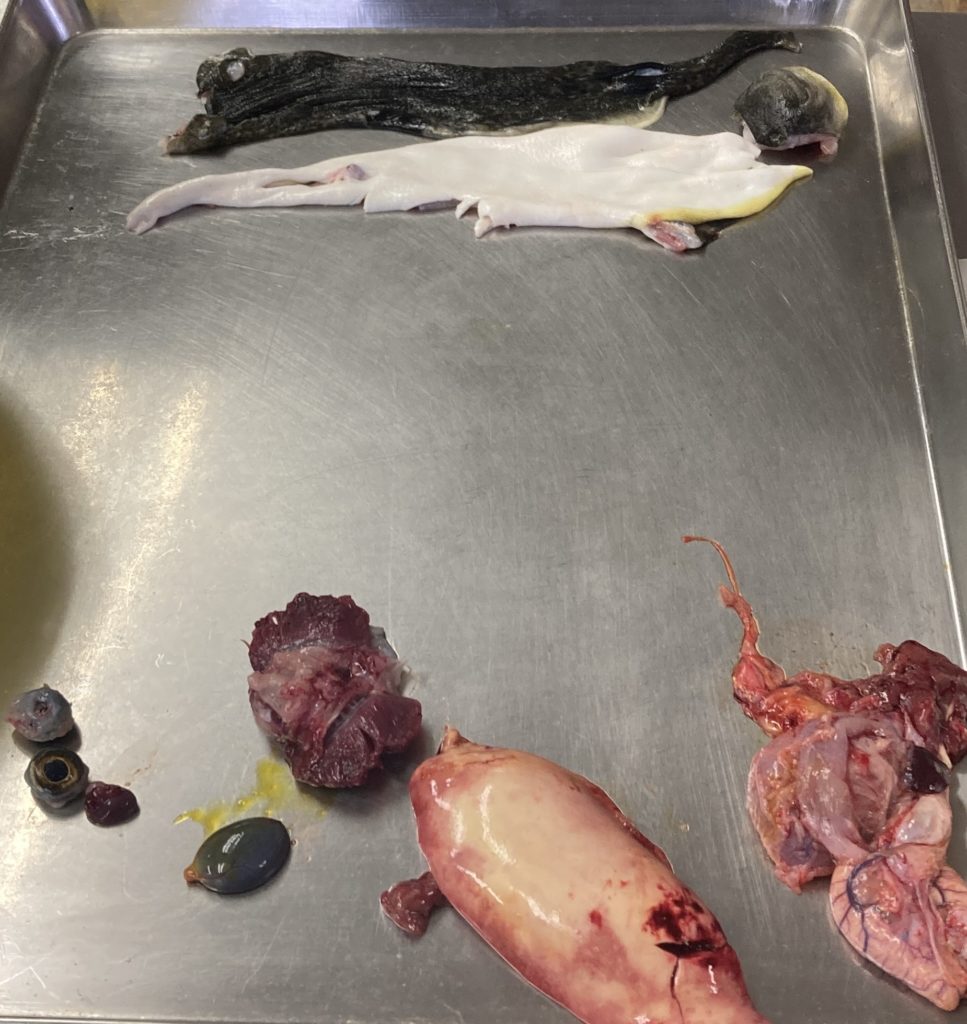
She then quickly pops off the eyeballs and maneuvers a knife around the gills to peel off the innards with her witty hands. This procedure is called migaki and only edible parts (except for the brain) are remained. The liver, pancreas, heart, guts, lungs, eyeballs, and skin are all inedible. It was only after gutting the fish did we know that it was female without a milt. It took them 30 minutes for them to fillet a fugu and convert it into migaki, which is reduced to 50-60% of the original weight of the fish.
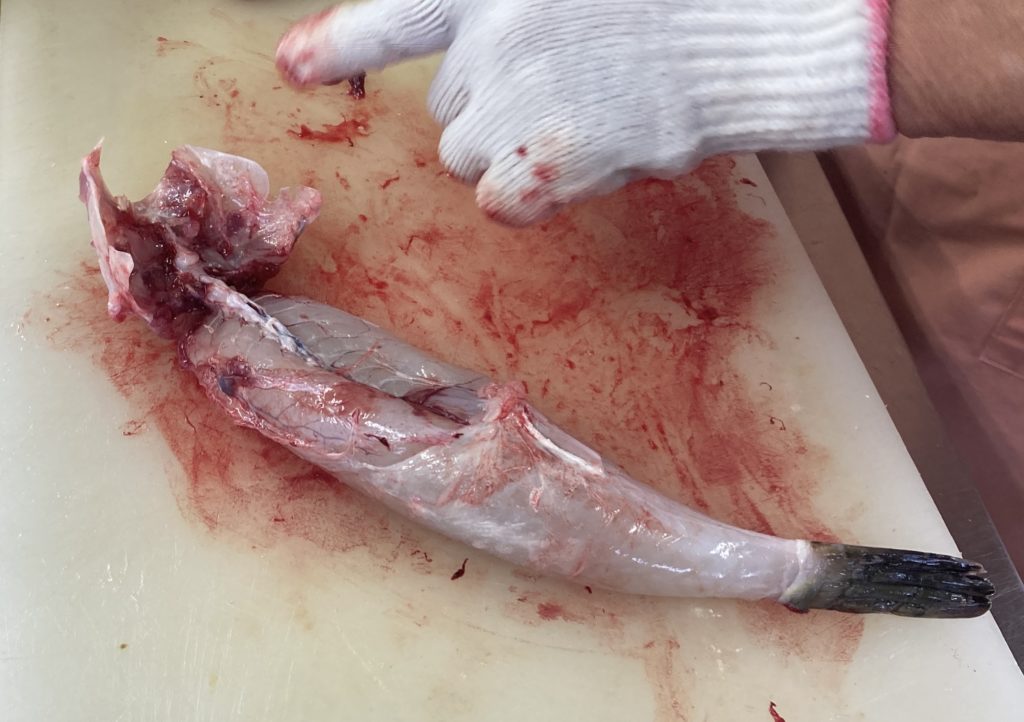
Besides the toxic parts, every scrap counts: Akino scrapes off the surface of the fins with a knife; they will be dried and steeped in hot sake liquor, a concoction known as hirezake.
Akino places the skin and internal organs of the fugu on a metal tray, labeling them as “inedible parts”. Edible parts are the toxin-free muscles.
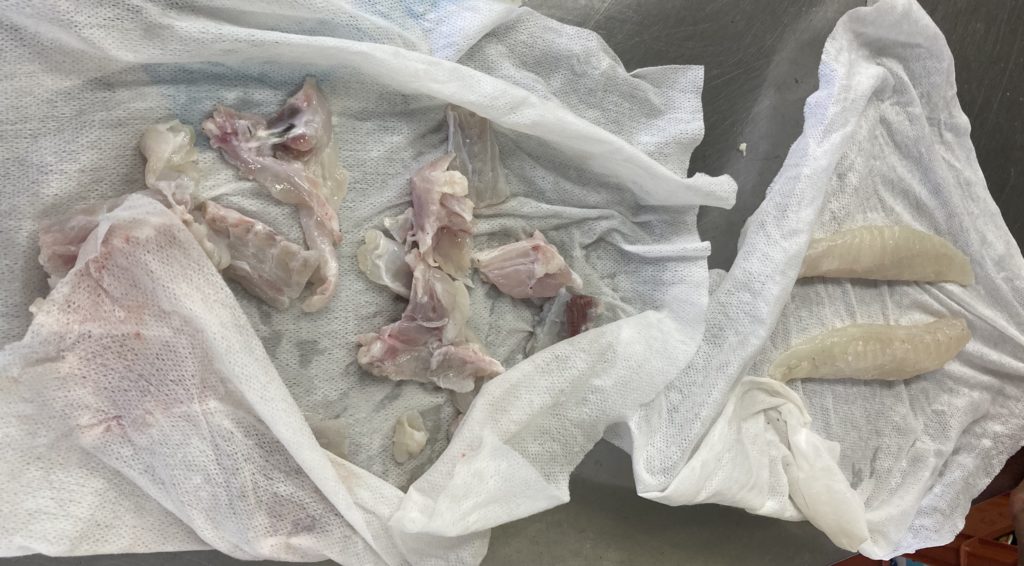
Next, Taeko picks up the meat – the part under the gills, pinches it off and brushes away any blood remains with a toothbrush as it might contain a trace of poison. She says that this process “requires the most careful attention” during the entire process. Never in her 30 years of being a licensed chef has she ever heard of anyone in this area dying from eating fugu, she adds. She then ice the fish meat in a deep steel pot filled with iced water to tighten the meat.
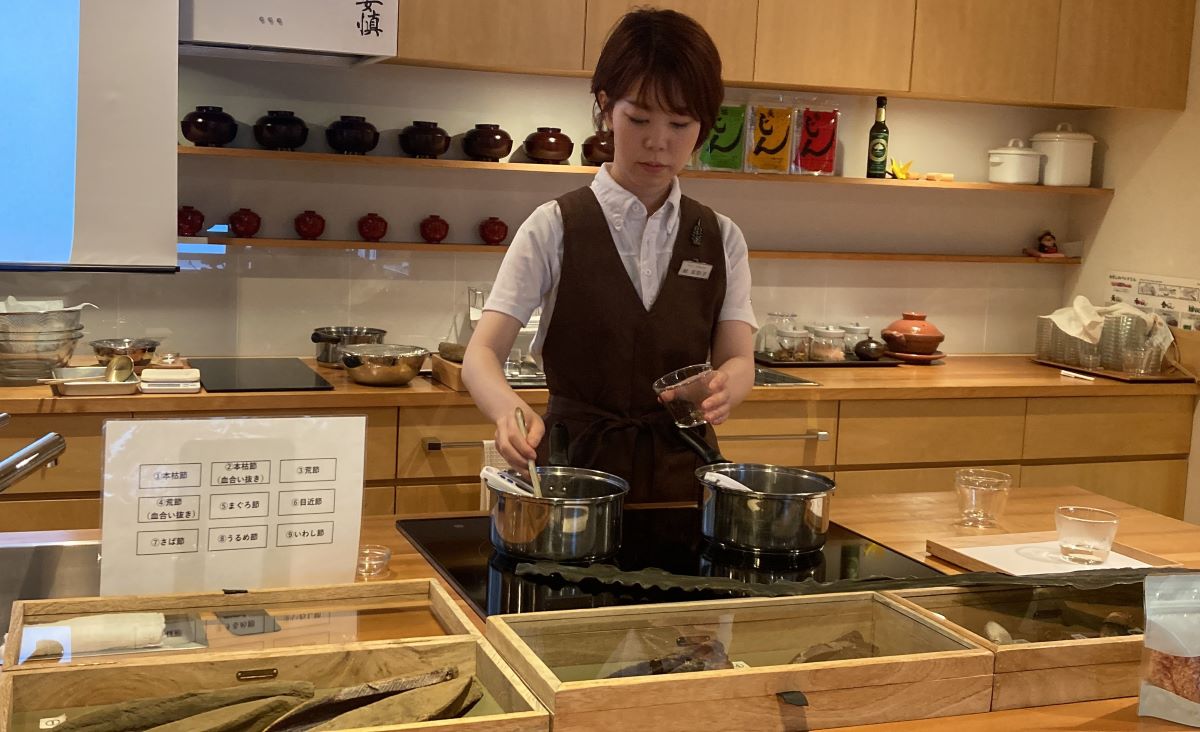
For a cooking session, we move from the Kamimuras’ processing facility to a communal facility with a kitchen. There, Taeko tells me how to cut migaki and arrange the translucent slices in a lovely flowery pattern on a plate. For this type of fish (mafugu), she says, “the knack is ‘to slice thicker than torafugu (tiger fugu)’ as it will taste much better”. After creating a few slices, she lets me do the same. As the fish is so sinewy and firm, I find it so hard to slice. I struggle with a few strips, which end up in a different size and thickness, and my heart almost breaks. Seeing me crestfallen, Taeko cheers me up and says I am getting much, much better.
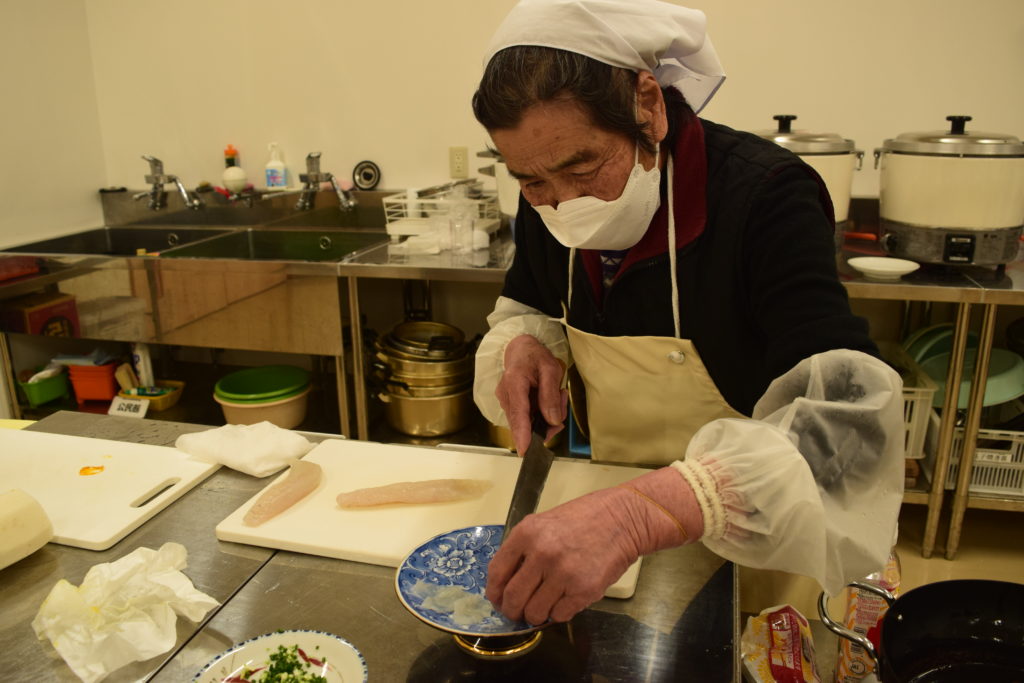
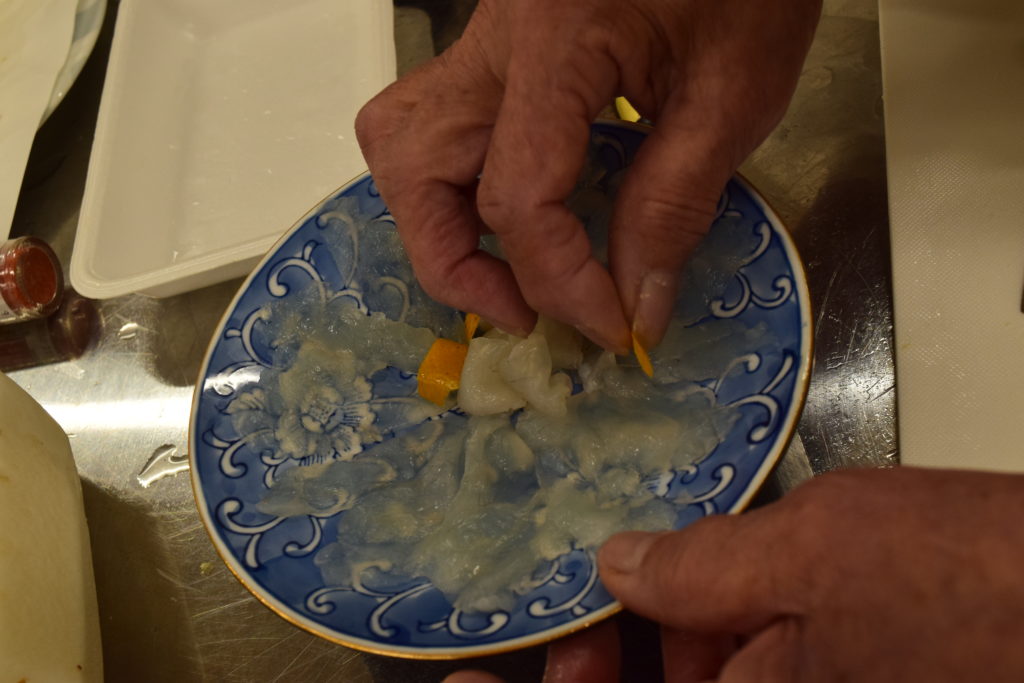
The sashimi is served with garnishes such as thin stalks of spring onions and yuzu citrus, around which fugu slices are wrapped before dipping in a sauce of ponzu sauce. Taeko and Akino also prepare a few more tempting options- tempura (deep-fries) and miso soup.
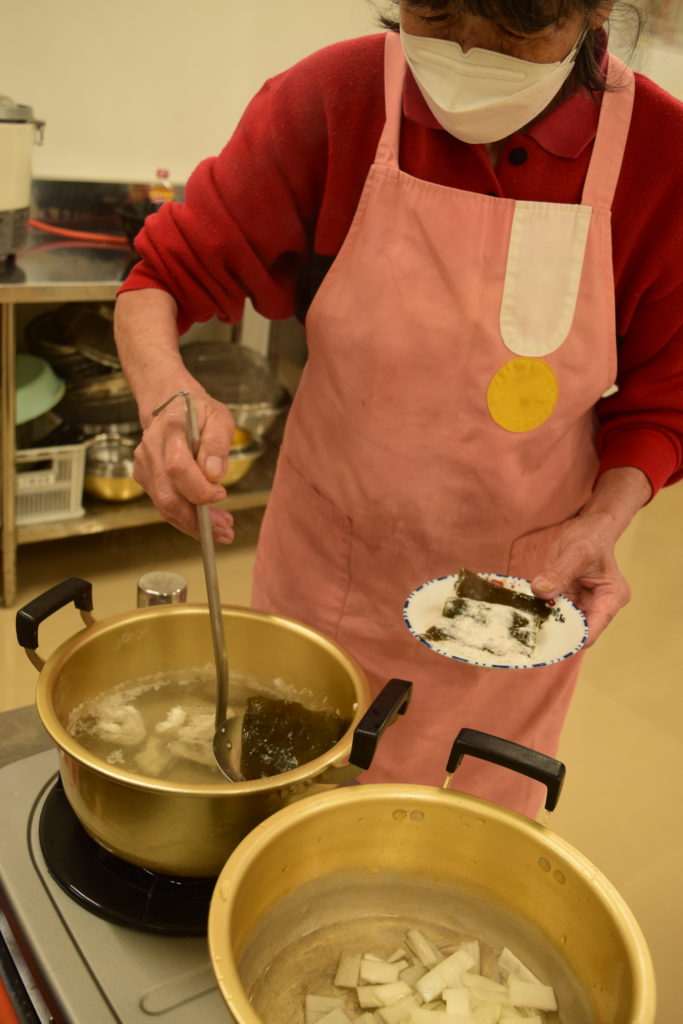
I’d probably have eaten a lifetime’s worth of fugu in one day, no joke. What a lavish experience it is! As fugu is a kind of “white meat fish”, it is rather dry and almost tasteless. Still, there’s something about it that makes me crave more. Besides its rich texture, fugu has a high amount of glutamic acid, commonly known as a kind of amino acid abundant in kelp, which is, in fact, the source of the umami.
My personal favourite is sashimi paired with momiji oroshi garnish, a mix of graded Japanese radish and red chili paper resembling the heavenly colour of autumn leaves (momiji). The spiciness and sourness of the sauce simply pull out the subtle flavour of fugu.
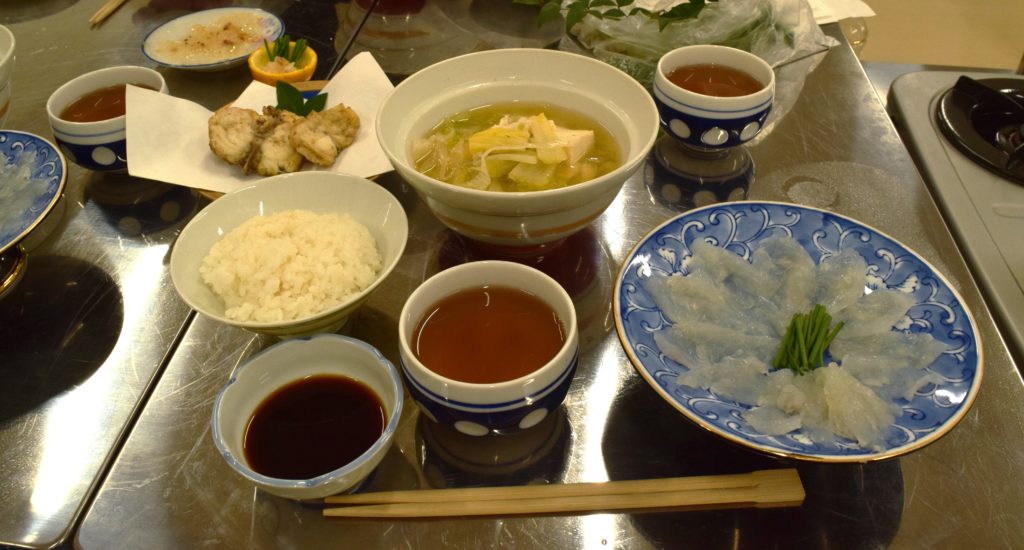
Watching me savouring with a silent growl, Taeko kindly offered me her plate of sashimi, saying “Have mine also! I can tuck in at any time”.
The fugu cooking class is offered by Hagi City Furusato Tourism Promotion Association Hagimae 698 and is available only during the winter season (from January to March, fishing season permitting). The tour takes two hours and costs 5,400 yen per person (tax included). Be mindful that they basically only accept cash. An interpreter can also be arranged at 7,700 yen (as of May 2024) upon request. Make your reservation three weeks in advance through a contact form https://hagi-tourism.com/contact/. For questions, you can contact them at hagimae698@gmail.com.
Footage is coming soon…