Embrace the overnight sacred dance in Miyazaki, the divine that entertains local communities from dusk to dawn
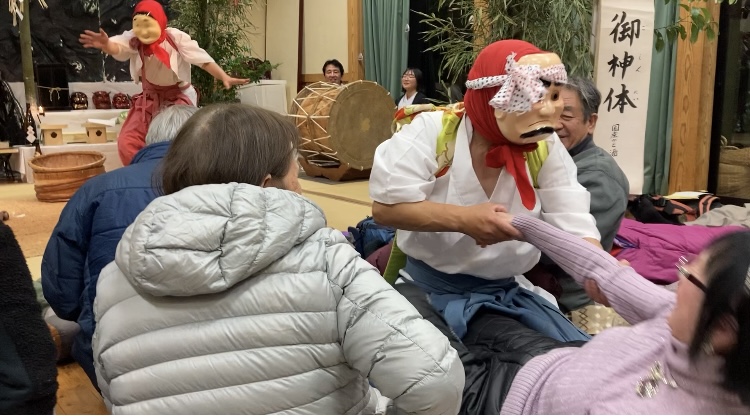
So, it is 3 am, and participants catch up in excitement. It is the ritual with auspicious hugs from dancers acting as “drunk” and wobbly god and goddess in masks. And, this ritual is called Takachiho Yokagura, a significant intangible folk cultural asset of Japan, originating in Miyazaki, the resort prefecture on the island of Kyushu in Japan.
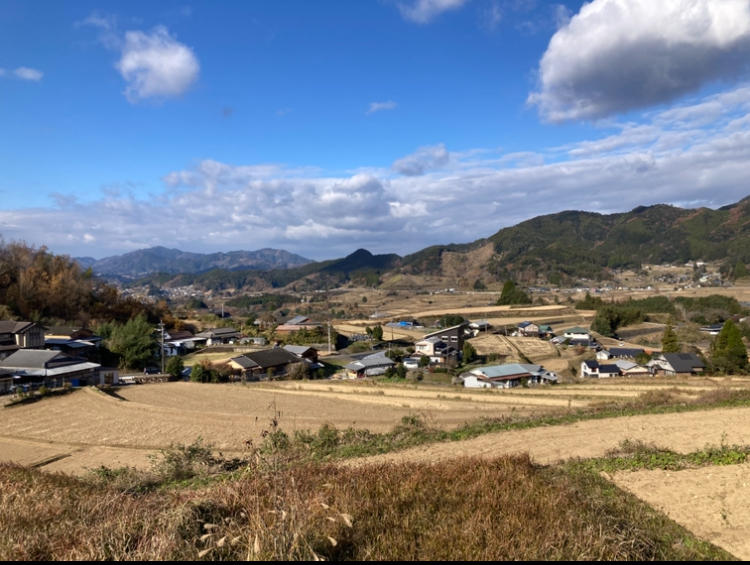
In the silent mountain village of Takachiho, an ancient sacred tradition that dates back over 700 to 800 years comes alive every winter in the form of Yokagura, or night kagura. From mid-November to February, villagers from around 30 local communities send out 33 sacred dances dedicated to the gods of Shinto (called kagura) throughout the night in a celebration that’s as spiritual as it’s communal. The heart of Kagura lies in dances to invite the local Shinto deities into the venue. The dances express gratitude for all the harvest in the year and prayers for another blessed one. The show is packed with repetitive dance steps, and the melody of flutes and taiko drums continues endlessly. As the divine comes to life through the bodies of the dancers, it is precisely this representation that shows divinity and humanity becoming one.
The highlight at midnight is called Sakekoshi or Goshintai, which is one of 33 programs going from 4:00 p.m. to 9:30 a.m. the next day without a single break. In between shows, spectators and dancers are served with supper and breakfast; guests are also provided with alcohol, and they might also take a nap right in front of the stage whenever they need to. This time, the event takes place in a local communal center, in which all spectators and dancers mix well together.
Sakekoshi features Izanagi no Mikoto (male deity) and Izanami no Mikoto (female deity) as a married couple. They are worshiped for creating 14 islands and 35 gods in Japan. The show starts with the couple doing funny shimmies to the beat of taiko. They then sit down and use hand gestures to pretend they are brewing Japanese sake in a wooden basket, scooping out and “chugging” the liquor.
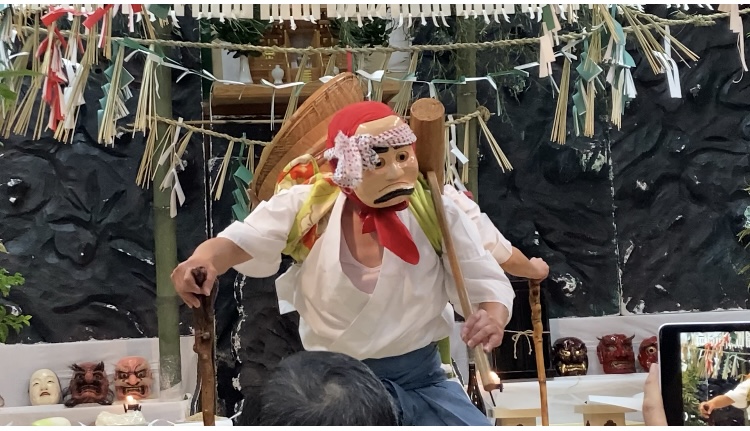
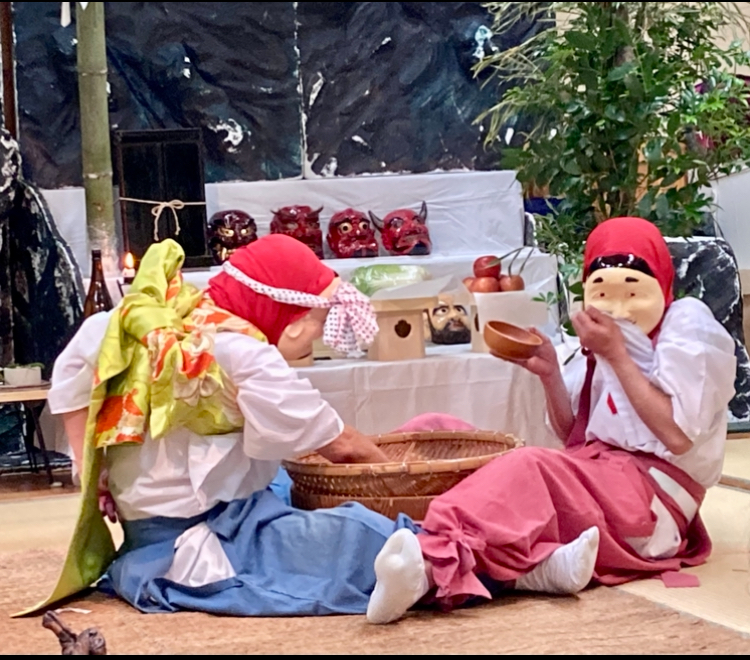
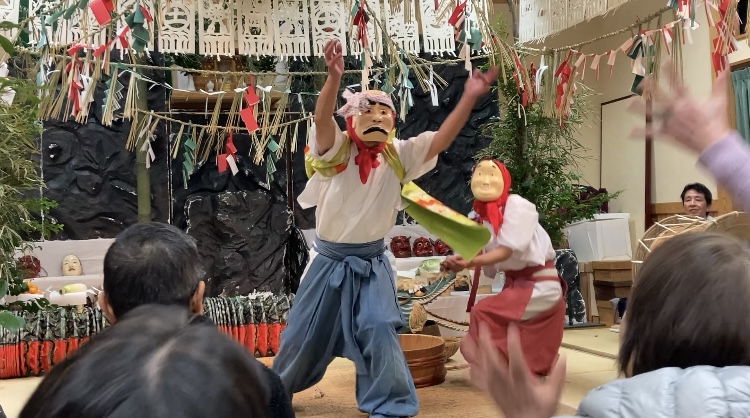
Here we go – the drunks then get belligerent and venture off the stage. Izanagi goes round the audience, greets them with a handshake or even a big, warm hug. Spectators who are singled out for the cuddle seem perplexed at first, but soon they beam.
Izanami follows right behind Izanagi, urging her man to move forward while he’s dawdling. While awkwardly making his way through the audience, Izanagi trips over, which is followed by waves of laughter. The show then ends with the couple scooping a handful of treats (real sweet this time! Not props!) out of the wooden basket and tossing them at the chuffed audience.
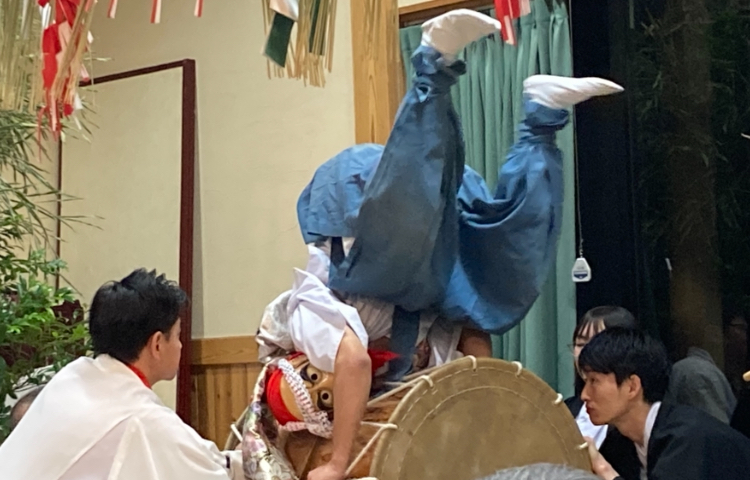
Don’t claim you know this tradition without attending the other programs! For one, Yatsubachi showcases an acrobatic performance where male deity Susanowo no Mikoto amazes the audience by performing a headstand on a taiko to express his joy of getting married.
And it is now 6:30 am. The morning has broken, and it’s time for a heart-warming breakfast. The audience and dancers sit in circles, passing round a plate filled with pickles and nishime (shimmers).

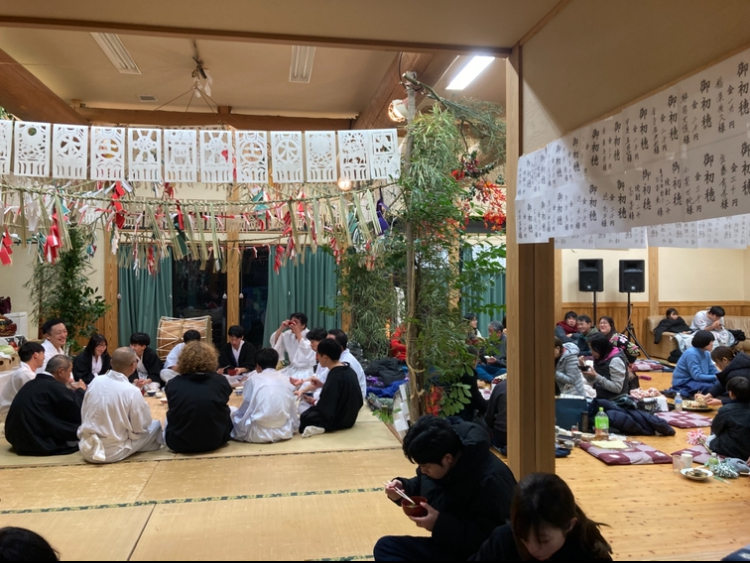
Brilliant twilight starts creeping in while the show is still going on! Some of the participants fancy a fag, so they go outside for a short break (in a chilly morning in mid-December…)
The last part. Perhaps the most loved part is Uzume, which is credited as the origin of kagura. Uzume is a story about Uzume no Mikoto, the female deity known as the goddess of entertainment. She dances to seduce Amaterasu Oomikami (the god of the sun) in a cave where she was hidden, which turned out to be hilarious, thus all the divines couldn’t help to laugh.
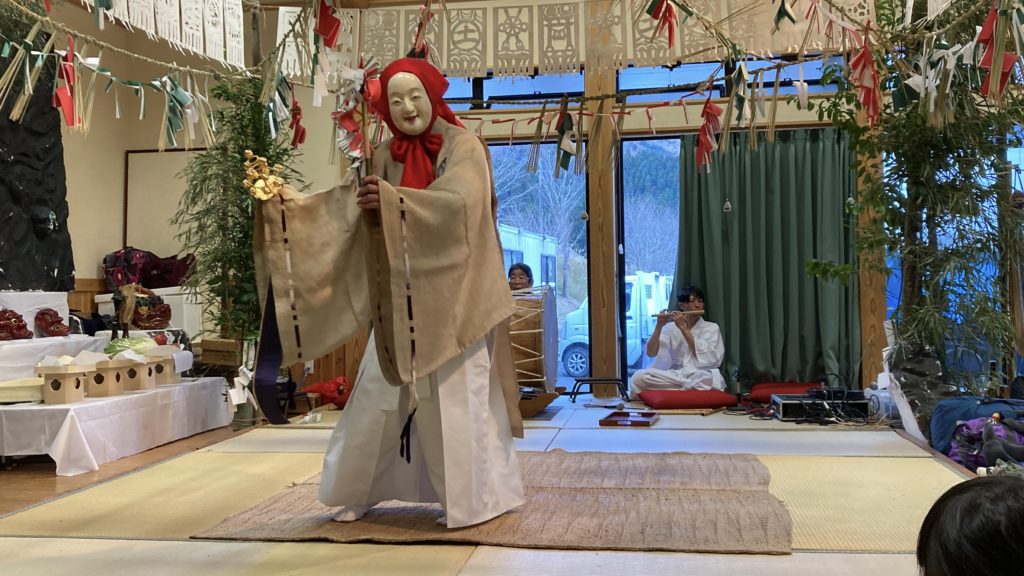
Uzume is closely tied to Totori. Amaterasu wonders at the noises outside made by the gods, hence she peeks over from the cave. Tacikara Onokami, a male deity who is lurking around. He wittily removes the giant rock door to the cave to let Amaterasu out, restoring the sunlight to the earth.

Takachiho Yokagura is complete with Kumooroshi, where spectators are invited to clap their hands to chant a few lines. When we, the little tired but still energized audience, are asked to pull strings attached to paper decorations hanging from the ceiling, confetti is released to fall on our heads to mark the ending.
—————————————————————————————————————————-About Takachiho Yokagura Takachiho Yokagura is held from mid-November to February in more than 30 communities in Takachiho town. The venues will be announced at the Takachiho tourism association’s website in Japanese only. You can view the shortened version of Takachiho Kagura every night at Takachiho Shrine (except for Dec 31st and January 1st) from 8 p.m. The seats are available at 1,000 yean on a first-come, first served basis. Please find details in English at https://takachiho-kanko.info/kagura/information/